
The foundations of music education in Bangladesh emphasize the need for a culturally grounded and inclusive approach. It critically engages with Western theories like Constructivism and Experiential Learning while situating them within the Bangladeshi socio-cultural context. The chapter argues for integrating indigenous knowledge systems and traditional music practices, such as folk and oral traditions, into formal education. It stresses that music is not only an academic subject but also a medium for social connection, cultural preservation, and personal growth. Drawing on Vygotskian and Deweyan perspectives, it highlights music’s role in shaping harmony in both learning and society. The chapter sets the stage for a decolonized, holistic music curriculum that values local expressions and supports community engagement. Ultimately, it calls for educational reform where music serves as both an emotional and intellectual tool in shaping democratic and empathetic learners. Active identities, reflecting the experiences, aspirations, and histories of the Bengalis. Through the lens of music, one can appreciate its profound and multifaceted influence, serving as an ever-present companion to the human experience, resonating through time and space within this rich cultural tapestry.
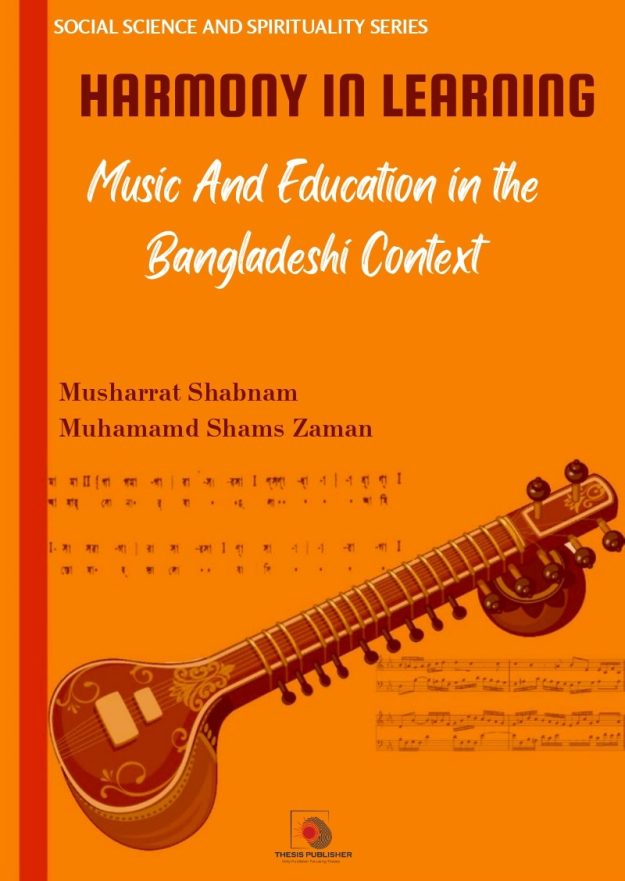
Harmony In Learning Music And Education in the Bangladeshi Context
Original price was: 760.00৳ .700.00৳ Current price is: 700.00৳ .
The foundations of music education in Bangladesh emphasize the need for a culturally grounded and inclusive approach. It critically engages with Western theories like Constructivism and Experiential Learning while situating them within the Bangladeshi socio-cultural context. The chapter argues for integrating indigenous knowledge systems and traditional music practices, such as folk and oral traditions, into formal education. It stresses that music is not only an academic subject but also a medium for social connection, cultural preservation, and personal growth. Drawing on Vygotskian and Deweyan perspectives, it highlights music’s role in shaping harmony in both learning and society. The chapter sets the stage for a decolonized, holistic music curriculum that values local expressions and supports community engagement. Ultimately, it calls for educational reform where music serves as both an emotional and intellectual tool in shaping democratic and empathetic learners. Active identities, reflecting the experiences, aspirations, and histories of the Bengalis. Through the lens of music, one can appreciate its profound and multifaceted influence, serving as an ever-present companion to the human experience, resonating through time and space within this rich cultural tapestry.
Reviews
There are no reviews yet.